What Is Hot Water Extraction (HWE)?
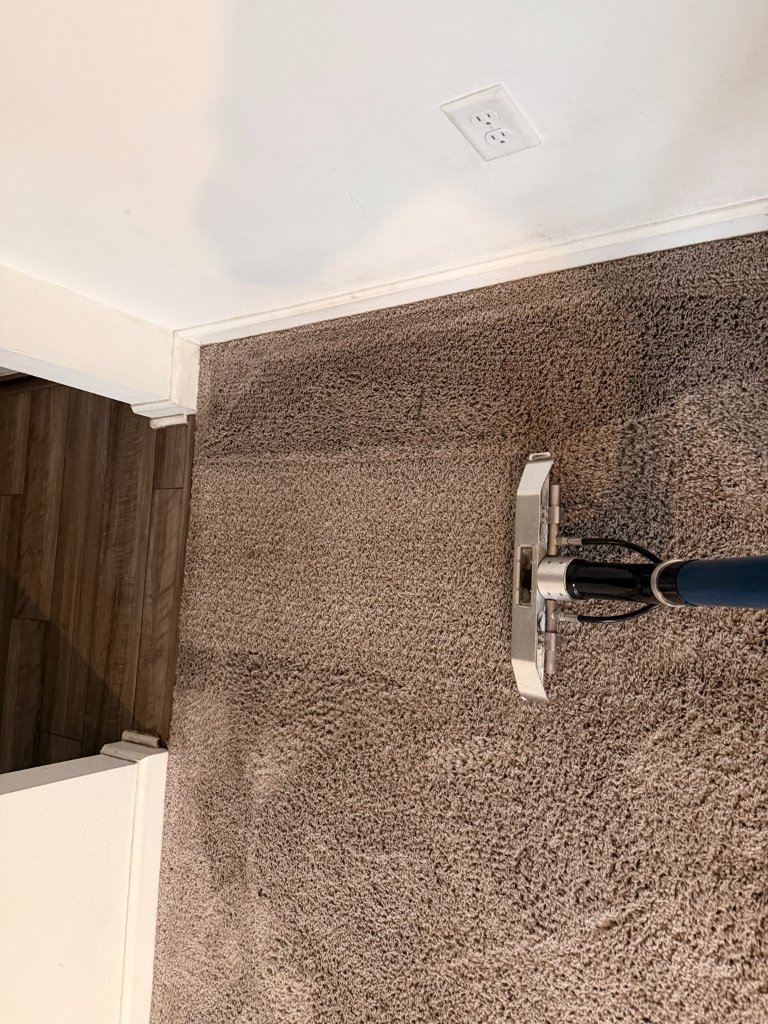
Hot water extraction — often called "steam cleaning" — is the process of injecting heated water (200°F+) mixed with cleaning solution into your carpet under high pressure, then immediately extracting it with a powerful vacuum. The heat dissolves grease and oils, the pressure drives the solution deep into the fibers and backing, and the vacuum removes the water along with dissolved soil, allergens, and contaminants.
HWE is the cleaning method recommended by every major carpet manufacturer and defined by the IICRC S100 standard for professional textile floor covering cleaning. HydroLux uses truck-mounted HWE for all residential carpet cleaning.
What Is Dry Carpet Cleaning?
"Dry" carpet cleaning is actually a low-moisture method that uses chemical cleaning compounds rather than water-based extraction. The most common type is encapsulation cleaning, where a polymer-based cleaning solution is applied to the carpet, worked into the fibers with a brush machine, and left to dry. As it dries, the polymer crystallizes around soil particles, which are then removed by subsequent vacuuming.
Other dry cleaning methods include bonnet cleaning (a rotating pad soaked in cleaning solution buffs the carpet surface) and compound cleaning (a moist powder is spread, brushed in, and vacuumed up). All of these methods leave some cleaning agent in the carpet.
When Dry Cleaning Makes Sense
Dry cleaning methods aren't inherently bad — they have legitimate use cases:
- Commercial maintenance: Offices, retail stores, and hotels that can't afford 2–4 hour dry times benefit from low-moisture cleaning for regular maintenance between deep cleanings.
- Light surface soil: If your carpet is relatively clean and just needs a refresh, encapsulation can improve appearance quickly.
- Between deep cleanings: Some commercial properties use encapsulation monthly and HWE quarterly for a balanced maintenance program.
However, for residential homes — especially those with pets, children, allergies, or visible soil — hot water extraction is always the superior choice.
The Allergen Factor
For allergy sufferers, the cleaning method you choose has a direct impact on indoor air quality:
- HWE at 200°F+ kills dust mites and flushes out pollen, pet dander, mold spores, and bacteria from deep in the carpet.
- Dry cleaning cannot kill dust mites or effectively remove allergens — the chemical compounds only address visible soil at the surface.
- HWE removes all cleaning solution from the carpet, leaving nothing behind that could irritate sensitive individuals.
- Dry cleaning leaves polymer residue in the carpet, which can be re-suspended into the air by foot traffic.
Making the Right Choice
For your home, the choice is clear: hot water extraction delivers deeper cleaning, better allergen removal, and longer-lasting results. The slightly longer dry time (2–4 hours vs 30–60 minutes) is a small price for carpets that are genuinely clean and healthy.
At HydroLux, we use only truck-mounted hot water extraction for residential cleaning. Learn more about our carpet cleaning process or request a free quote. Call (813) 607-1182 — serving Wesley Chapel, New Tampa, Lutz, Trinity, Odessa, and Citrus Park.
Ready to Book Hot Water Extraction?
Schedule online in minutes — truck-mounted extraction, transparent pricing, locally owned and operated.
Locally owned • Serving Wesley Chapel & Tampa Bay • Truck-mounted professional cleaning